



BREAKING: The “100 Euro Rule” No Longer Applies - How Tourists Are Now Reclaiming VAT on Everything in France
20/02/2026
For decades, international visitors shopping in France faced a frustrating limitation: to qualify for a VAT refund, they had to spend at least €100 in a single store. If a purchase didn’t meet that threshold, the refund simply wasn’t possible. Buy a €90 scarf? No refund. Spend €80 at a pharmacy? No refund. Purchase €50 worth of wine? Still no refund.
As a result, millions in unclaimed vat in France were left behind each year. Tourists often spent significant amounts during their trip, but because their receipts were split across multiple shops, they failed to meet the minimum purchase requirement in any one store. As of 2026, that era is effectively over. A quiet digital transformation, driven by platforms like Airvat, has introduced a cumulative model that allows travelers to combine purchases and reclaim VAT more flexibly than ever before.
The Old €100 Minimum Purchase Rule Explained
Under the traditional tax-free system, tourists were required to meet a strict minimum purchase of €100 in a single store, on the same day, to qualify for a VAT refund.
This requirement was built into the old paper-based process. When a traveler requested a “Tax Free” form at checkout, the store’s system automatically checked whether the receipt reached €100. If it didn’t, the refund form could not be issued.
Here’s how restrictive it was in practice:
- €90 on clothing - ineligible
- €80 on pharmacy skincare - ineligible
- €50 on gourmet food - ineligible
Even if a visitor spent €300 across different stores in Paris, none of it qualified unless one single receipt reached €100. This often led tourists to buy items they didn’t truly want-simply to cross the threshold.
What Changed in 2026? The Digital Shift in VAT in France
The change in vat in France did not result from a dramatic legal reform. Officially, travelers must still spend at least €100 in total to qualify for a VAT refund.
What changed is how that total is calculated
Digital operators introduced a cumulative approach. Instead of tying eligibility to one store and one receipt, the system now allows multiple invoices from different retailers to be consolidated into a single digital VAT file. The per-store minimum purchase barrier has effectively become irrelevant under the digital cumulative model.

The “Cumulative Model”: How Small Purchases Now Count
The cumulative model shifts the focus from “€100 in one shop” to “€100 during your trip.” Under the old system:
- €100 was required in a single store
- Paper tax-free forms were issued at checkout
- Smaller purchases were automatically excluded
Under the new digital model:
- €100 total spending during the trip qualifies
- Multiple invoices can be combined
- There is no per-store minimum purchase restriction
For example, a €20 dress, €30 pharmacy products, and a €50 accessory can now be grouped into one VAT file. Individually, none qualify. Together, they do. This means tourists can shop naturally, without structuring their purchases around refund rules.
Airvat: The Digital Solution Powering the Change
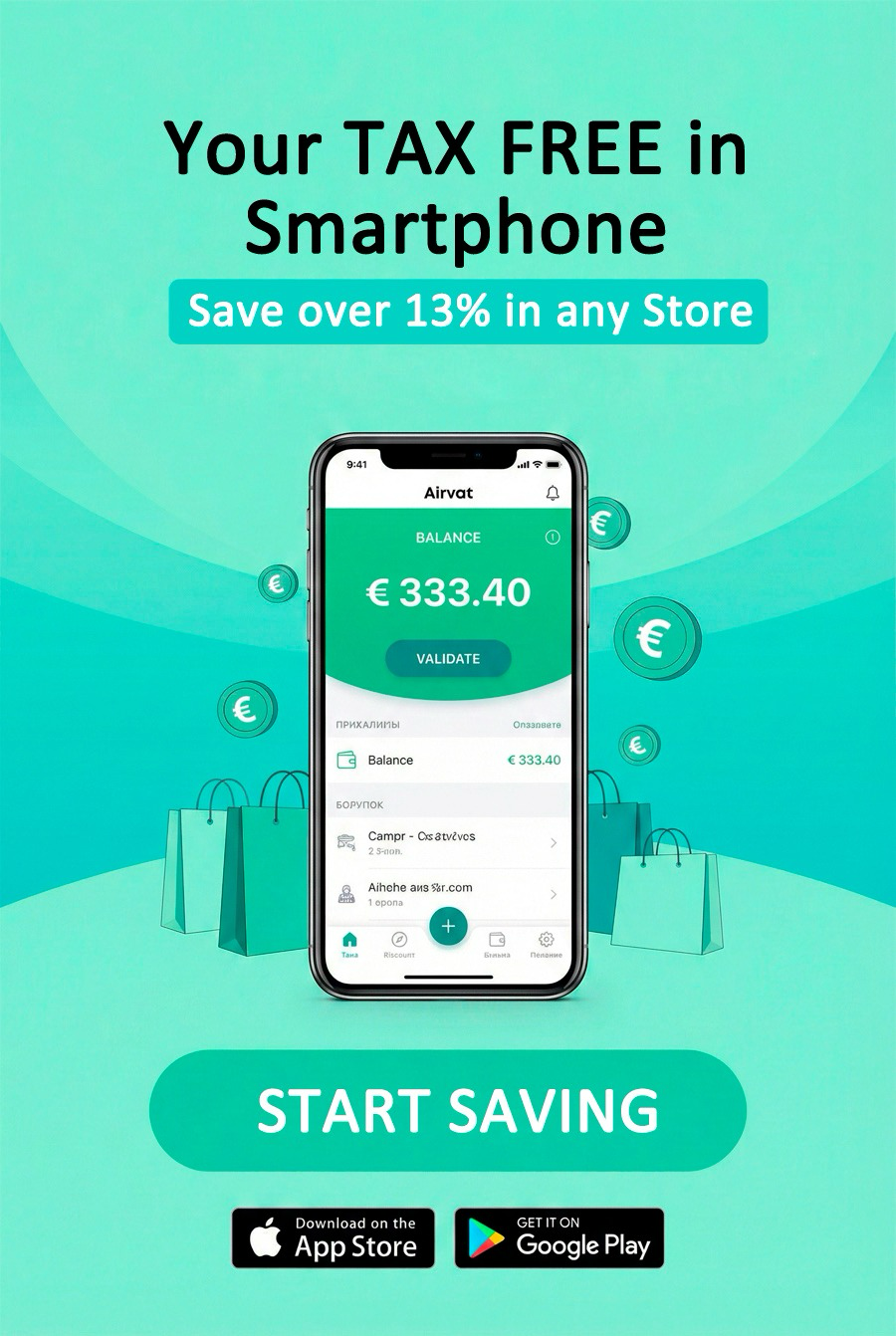
At the heart of this shift is Airvat, a digital VAT refund platform designed to simplify VAT in France for international travelers.
Instead of requesting the traditional “Tax Free” form at the time of booking, Airvat users follow a different procedure. Travelers must request a commercial invoice (“invoice”) issued specifically for Airvat, addressed to the Airvat legal entity as specified in the application. This information is important (https://airvat.com/blog/invoices-in-the-name-of-airvat) .
Airvat has no minimum purchase amount requirement, it combines different receipts so that travelers can easily accumulate the 100 euro threshold. However, the invoice must be clearly issued for Airvat and not just a standard unmarked receipt.
Airvat then:
- Digitally consolidates invoices from multiple stores
- Creates a compliant VAT refund file
- Guides users through customs validation
- Transfers the refund directly to the traveler
By eliminating manual paperwork and intermediary refund desks, the system often allows travelers to receive a higher net VAT refund compared to traditional methods. You can download Airvat directly from the official website, app stores or Google play.
How the New VAT Refund Process Works Step by Step
Using Airvat, the VAT refund process becomes straightforward. However, the wording at checkout is critical. Here’s how it works:
- Download the Airvat app before shopping.
- Do not ask for “Tax Free.” Saying this activates the traditional system with the per-store minimum purchase rule.
- Ask for a commercial invoice (“facture”) issued specifically for Airvat. The invoice must be addressed to Airvat’s legal entity, as shown in the app.
- Upload the invoices in the app and validate them at customs before departure.
The difference between “Tax Free” and “Invoice for Airvat” determines which system is activated. One triggers the old €100 per-store rule. The other enables the cumulative digital model.

Why This Is Disrupting Tourist Shopping Behavior
The evolution of vat in France is reshaping how visitors shop.
Small purchases now count. Tourists can reclaim VAT on cosmetics, books, gourmet products, and everyday goods that previously wouldn’t qualify.
Shoppers are no longer forced to concentrate spending in large department stores just to meet a minimum purchase threshold. Independent boutiques and smaller retailers now offer equal refund opportunities. Most importantly, travelers no longer need to inflate their purchases artificially.
Financial Impact: How Much Can Tourists Actually Get Back?
France applies a standard VAT rate of 20% on most goods. After service fees, the typical VAT refund ranges between 11% and 13%.
Digital platforms like Airvat reduce operational overhead by eliminating paper forms and manual processing. This efficiency can translate into better net returns for travelers.
For example:
- €500 in total purchases → potential refund of €55–€65
- €1,000 in total purchases → potential refund of €110–€130
For families, frequent travelers, or luxury shoppers, the savings can quickly become significant.
What Travelers Must Do Before Checkout
To benefit from the new cumulative system, preparation is key.
Before paying, remember:
- Install Airvat in advance
- Avoid saying “Tax Free”.
- Request a commercial invoice issued specifically for Airvat
- Ensure the invoice is addressed to Airvat’s legal entity
- Keep digital copies of all invoices
These small adjustments prevent the minimum purchase rule from blocking your VAT refund.

Is the €100 Rule Really Dead?
Technically, the €100 requirement still exists at the government level. Travelers must spend at least €100 in total during their trip to qualify for vat in France refunds.
However, the practical barrier of the €100 minimum purchase per store has effectively lost its power under the digital cumulative model. For modern travelers using digital platforms, the “100 Euro Rule” as it was once understood is no longer relevant.
If you leave France without claiming your VAT refund, you may be leaving real money behind. Download Airvat, shop freely, and make sure every eligible euro works in your favor.